Energy Drinks vs Pre-Workout: Which Do You Actually Need?
Pre-workout is built for the gym; energy drinks are built for the day. Caffeine doses, beta-alanine, pumps, and when each one makes sense.
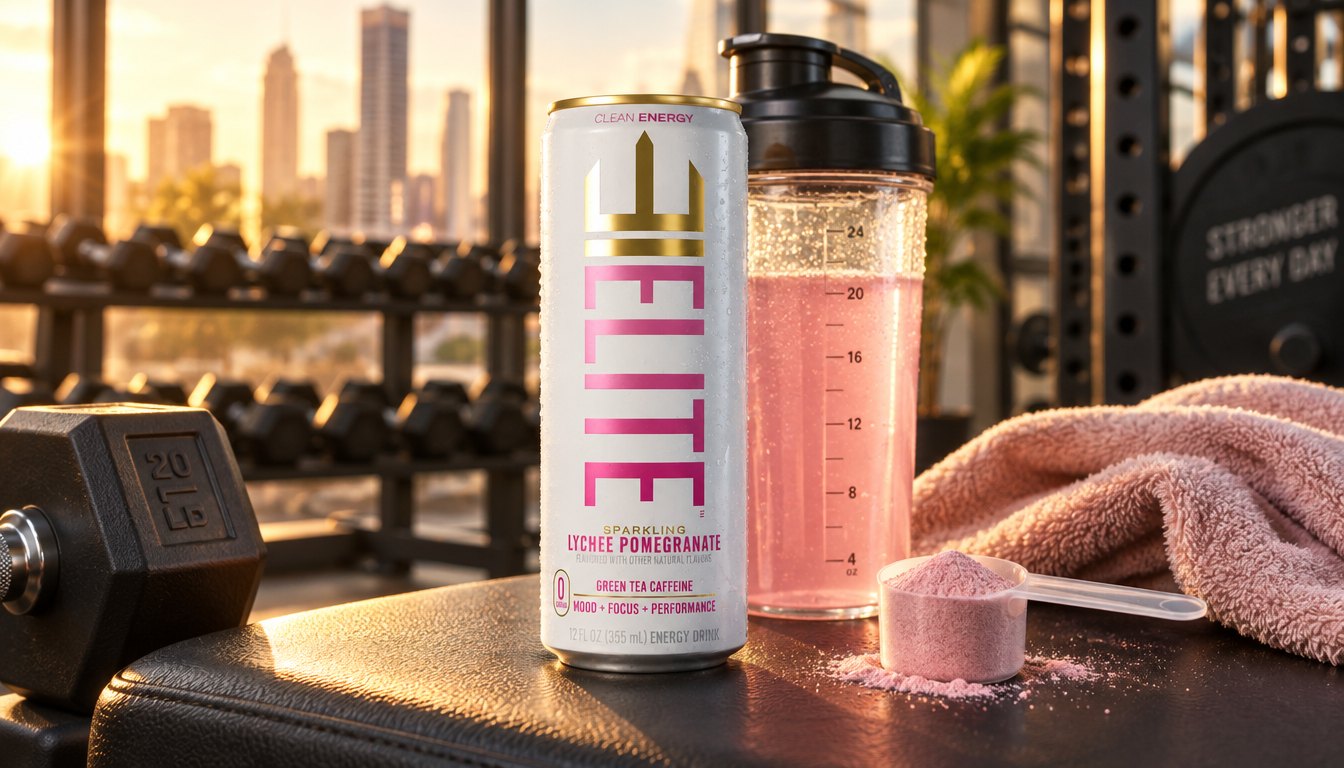
Key takeaways
- Caffeine is the primary active in most pre-workouts — a 200 mg energy drink covers the studied performance range.
- Pre-workout adds training-specific ingredients (citrulline, beta-alanine) you may not want daily.
- For work, study and everyday training, a moderate transparent energy drink is the more versatile tool.
One is a tub of neon powder, the other is a cold can. They overlap more than the marketing suggests — and the differences tell you which one your day actually needs.
What's in each
| Pre-workout | Energy drink | |
|---|---|---|
| Caffeine | Typically 250–350 mg per scoop | 80–300 mg per can (ELITE: 200 mg) |
| Signature actives | Citrulline (pump), beta-alanine (tingle), creatine | Varies — ELITE adds L-Theanine, Lion's Mane, KSM-66® |
| Sweetener | Usually sucralose or ace-K | Usually sucralose — ELITE uses plant-extracted Reb-M |
| Format | Powder you mix | Ready to drink |
| Built for | The gym session | The whole day |
The caffeine overlap
Strip away the flavoring and the primary performance ingredient in most pre-workouts is caffeine — the same caffeine in your energy drink. The research on caffeine and exercise performance plateaus at moderate doses; more isn't linearly better, and 300+ mg scoops mostly buy side effects.
What pre-workout adds — and whether you want it
Citrulline supports blood flow and "pump"; beta-alanine causes the famous tingle and, over weeks of loading, can support muscular endurance. These are training-specific tools. If you're not lifting, they're passengers — and many people actively dislike the tingle.
When each one wins
- Heavy training session: pre-workout's pump ingredients earn their place.
- Everyday training, run, or class: a 200 mg energy drink is simpler and sufficient.
- Work, study, long drive: energy drink — ideally one with L-Theanine for calm focus.
- Daily habit: energy drink with a moderate dose and a sweetener you're comfortable with.
Where ELITE fits
200 mg of green tea caffeine covers the studied performance range, and the 200 mg of L-Theanine keeps it smooth enough to drink before a workout or a workday. Zero sugar, plant-extracted Reb-M, nothing that makes your face tingle.
Go deeper
The science behind the can
Frequently asked questions
Can I use an energy drink as a pre-workout?
Yes — caffeine is the primary active in most pre-workouts, and a 200 mg can covers the studied performance range. What you won't get is the pump ingredients (citrulline) or the beta-alanine tingle, which many people prefer to skip.
Is pre-workout stronger than an energy drink?
Usually in caffeine — many pre-workouts run 250–350 mg per scoop — but 'stronger' isn't the goal for most sessions. The performance research on caffeine plateaus well below the top doses.
What's the downside of using pre-workout daily?
High caffeine loads, artificial sweeteners in most powders, and ingredients like beta-alanine that are training-specific. For work, study, or a daily habit, a moderate, transparent energy drink is the better fit.
References & further reading
- International Society of Sports Nutrition position stand — caffeine and exercise performance
- FDA, Spilling the Beans: How Much Caffeine Is Too Much?
- Camfield et al. (2014), Nutrition Reviews — caffeine + L-theanine meta-analysis
About the author
ELITE Energy
Official editorial content from the team behind ELITE Energy — Islamorada, FL
ELITE Energy editorial review: Checked for accuracy against published, peer-reviewed research and our current can formulation. Last reviewed October 22, 2026. This content is for educational purposes and is not medical advice.
Keep reading
What Is a Nootropic Energy Drink?
Nootropic energy drinks pair caffeine with ingredients studied for focus and cognition. What the term means, what's usually inside, and what the research supports.
6 min read
What Is Reb-M? The Plant-Extracted Sweetener in ELITE
Reb-M (rebaudioside M) is the cleanest-tasting sweetener in the stevia leaf. How it's extracted, why it doesn't taste like old stevia, and why ELITE uses it.
5 min read
Reb-M vs Sucralose: What's Actually the Difference?
Reb-M is extracted from the stevia leaf; sucralose is synthesized from sugar. Origin, taste, regulatory status and daily-habit considerations compared.
5 min read