What Is a Nootropic Energy Drink?
Nootropic energy drinks pair caffeine with ingredients studied for focus and cognition. What the term means, what's usually inside, and what the research supports.
Key takeaways
- A nootropic energy drink pairs caffeine with ingredients studied for cognitive effects — most often L-Theanine.
- The caffeine + L-Theanine combination has the strongest human evidence; other nootropics have earlier-stage research.
- Dose disclosure is the trust signal: serious formulas print milligrams, weak ones hide behind proprietary blends.
"Nootropic" used to belong to supplement stores. Now it's on energy drink cans. Here's what the term actually means, what's usually inside, and how to tell a real formula from a marketing one.
What "nootropic" means
Nootropics are substances studied for their effects on cognitive function — attention, memory, mental stamina. The term covers a wide range, from caffeine itself (the world's most-used nootropic) to amino acids like L-Theanine, mushrooms like Lion's Mane, and compounds like alpha-GPC.
A nootropic energy drink, then, is one that treats caffeine as the foundation rather than the whole product — pairing it with ingredients intended to shape how that caffeine feels and what it does for focus.
The ingredients you'll see most
| Ingredient | What it's studied for | Evidence stage |
|---|---|---|
| Caffeine | Alertness, reaction time, vigilance | Extensive human research |
| L-Theanine | Calm alertness; smooths caffeine's edge | Multiple controlled human trials |
| Lion's Mane | Nerve growth factor pathways, cognition | Early human trials, promising |
| Ashwagandha (KSM-66®) | Stress response and recovery | Dozens of human trials on the extract |
| Alpha-GPC | Acetylcholine precursor, power output | Limited human research |
| B vitamins | Cofactors in energy metabolism | Well established nutritionally |
The pairing with the most evidence
Caffeine plus L-Theanine is the most-replicated nootropic combination in the literature. Controlled trials — including a 2021 meta-analysis in Nutritional Neuroscience — report improved attention and task switching versus caffeine alone, with less of the jittery, anxious edge. Studied ratios generally sit between 1:1 and 2:1 L-Theanine to caffeine.
The dosing problem
The gap between a nootropic energy drink and an energy drink with nootropic marketing is the number on the label. A can that lists six ingredients inside a 500 mg "focus blend" is telling you almost nothing — the effective doses in research are often higher than the entire blend. Look for each ingredient listed with its own milligram figure.
How ELITE approaches it
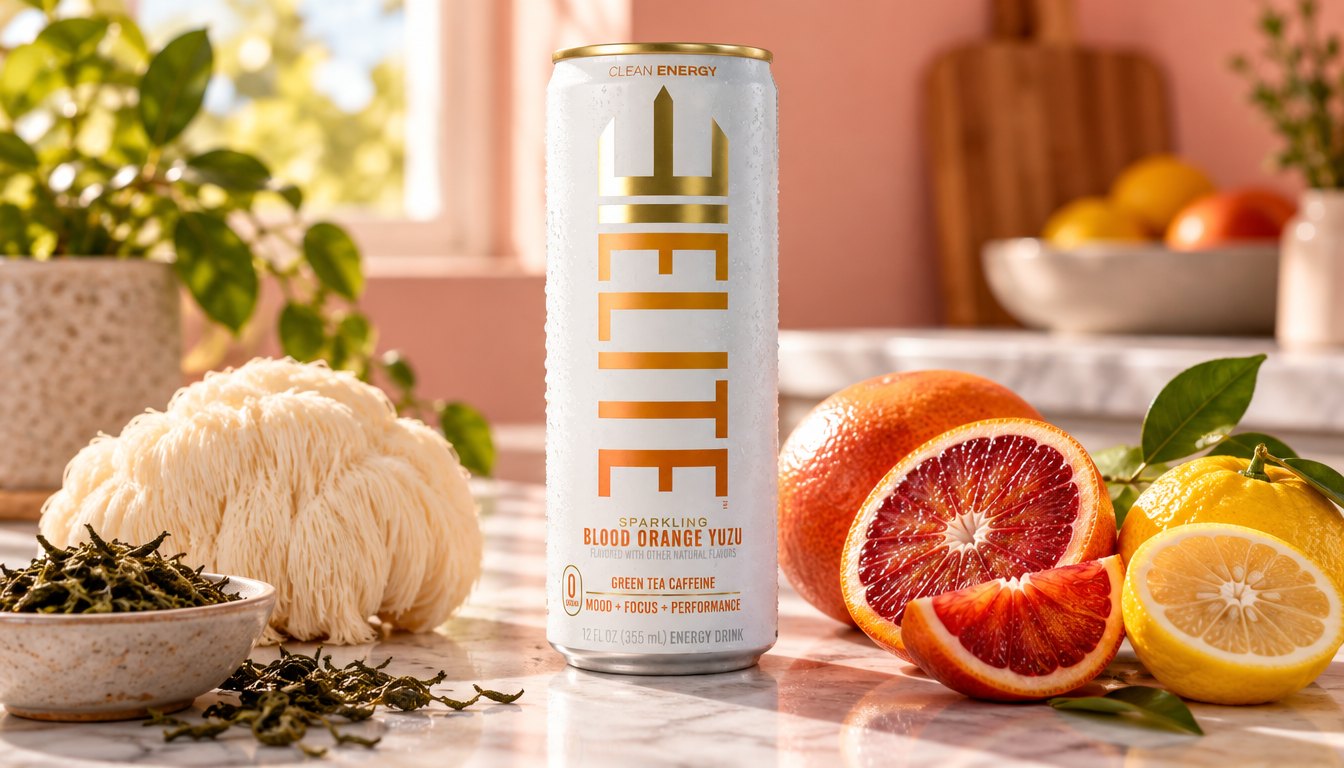
Every active is disclosed: 200 mg green tea caffeine, 200 mg L-Theanine, 200 mg Lion's Mane, 100 mg KSM-66® Ashwagandha, and a 100% DV methylated B-complex — printed on the panel, not buried in a blend.
What nootropic drinks won't do
They won't replace sleep, and no single can transforms cognition. The realistic frame: a well-formulated can makes the next few hours of work feel smoother, and ingredients like Lion's Mane and ashwagandha are studied over weeks of consistent use, not minutes.
Educational content, not medical advice. If you're pregnant, nursing, or taking medication, talk to your doctor before using nootropic products.
Go deeper
The science behind the can
Frequently asked questions
What makes an energy drink 'nootropic'?
It pairs caffeine with ingredients studied for cognitive effects — most commonly L-theanine, and increasingly lion's mane, alpha-GPC or adaptogens like ashwagandha. The label should disclose each dose in milligrams.
Do nootropic energy drinks actually work?
The caffeine + L-theanine pairing has the strongest evidence, with controlled trials showing improved attention versus caffeine alone. Other ingredients have earlier-stage evidence. Dose disclosure is the best signal of a serious formula.
Is ELITE a nootropic energy drink?
Yes. Each can pairs 200 mg green tea caffeine with 200 mg L-theanine, 200 mg lion's mane and 100 mg KSM-66® ashwagandha — every dose printed on the panel.
References & further reading
- Camfield et al. (2014), Nutrition Reviews — caffeine + L-theanine meta-analysis
- Haskell et al. (2008), Biological Psychology — L-theanine with caffeine, cognition and mood
- Mori et al. (2009), Phytotherapy Research — Hericium erinaceus and cognitive function
- Chandrasekhar et al. (2012), Indian Journal of Psychological Medicine — KSM-66® ashwagandha and stress
About the author
ELITE Energy
Official editorial content from the team behind ELITE Energy — Islamorada, FL
ELITE Energy editorial review: Checked for accuracy against published, peer-reviewed research and our current can formulation. Last reviewed October 22, 2026. This content is for educational purposes and is not medical advice.
Keep reading
What Is Reb-M? The Plant-Extracted Sweetener in ELITE
Reb-M (rebaudioside M) is the cleanest-tasting sweetener in the stevia leaf. How it's extracted, why it doesn't taste like old stevia, and why ELITE uses it.
5 min read
Reb-M vs Sucralose: What's Actually the Difference?
Reb-M is extracted from the stevia leaf; sucralose is synthesized from sugar. Origin, taste, regulatory status and daily-habit considerations compared.
5 min read
Caffeine and Sleep: How Late Is Too Late?
Caffeine's half-life is five to six hours, so an afternoon can is still with you at bedtime. What the research says about timing, sensitivity and 200 mg cans.
5 min read