Caffeine and Sleep: How Late Is Too Late?
Caffeine's half-life is five to six hours, so an afternoon can is still with you at bedtime. What the research says about timing, sensitivity and 200 mg cans.
Key takeaways
- Caffeine's half-life is five to six hours — a 3 p.m. can is still half active at 9 p.m.
- Research found caffeine even 6 hours before bed measurably reduced sleep quality.
- Timing protects sleep better than dose reduction; front-load your caffeine.
The can that powers your afternoon can quietly tax your night. Caffeine doesn't leave your system when the feeling fades — and the research on timing is more specific than most people expect.
The half-life math
Caffeine's half-life in healthy adults is roughly five to six hours. Drink a 200 mg can at 3 p.m. and around 100 mg is still circulating at 9 p.m.; around 50 mg remains at 2 a.m. You may fall asleep anyway — but the depth and quality of that sleep is a different story.
What the research found
A widely cited 2013 study in the Journal of Clinical Sleep Medicine gave participants 400 mg of caffeine at bedtime, 3 hours before, and 6 hours before. Even the 6-hour dose measurably reduced total sleep time — by more than an hour in objective measurement — despite participants often not noticing the difference subjectively.
A practical cutoff
- Most people: last caffeine at least 8 hours before bed
- Sleep-sensitive or slow metabolizers: 10+ hours
- If you sleep at 11 p.m., that puts the last can around 2–3 p.m.
Sensitivity is individual
Genetics (particularly CYP1A2 variants), body size, medications, and tolerance all move your personal line. Some people metabolize caffeine twice as fast as others. If you sleep poorly despite an early cutoff, move it earlier — or drop the dose.
Where ELITE fits
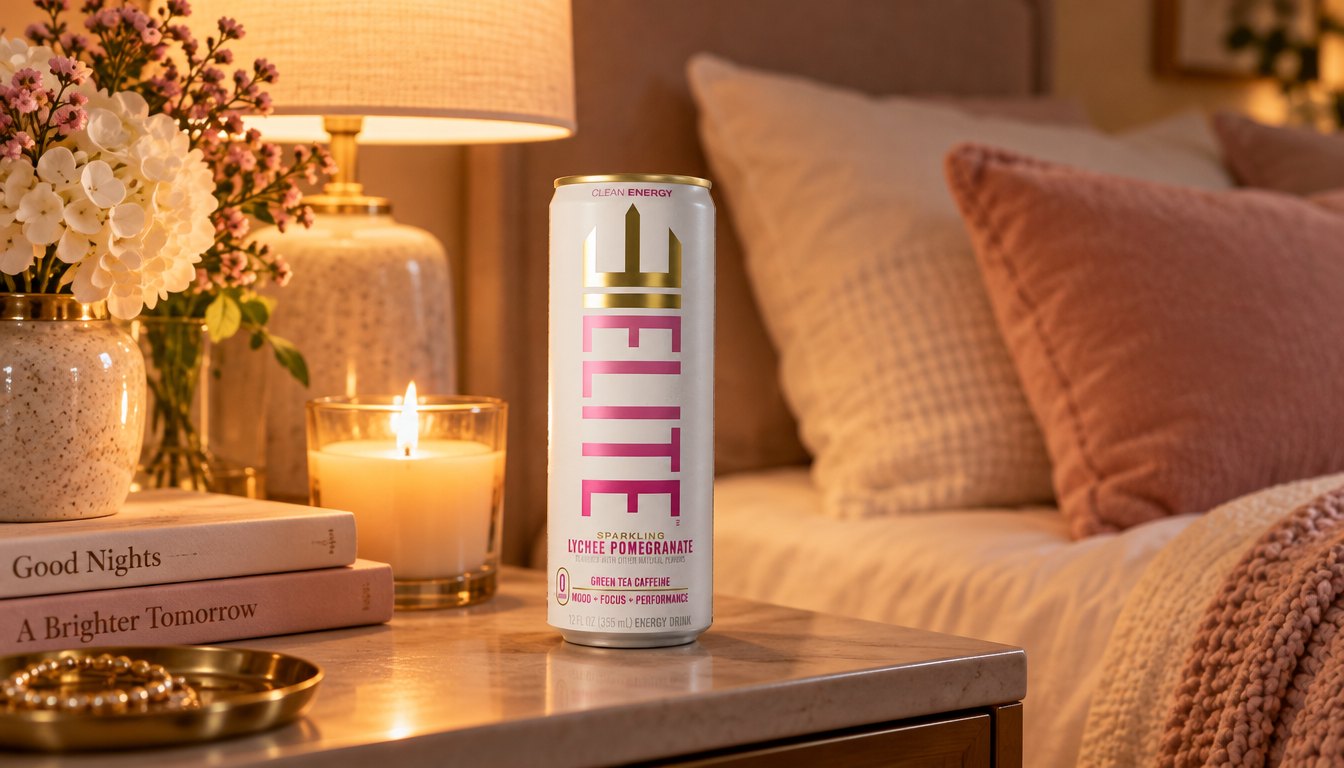
At 200 mg per can, ELITE is a full, effective dose — which is exactly why timing matters. Have it in the morning or early afternoon, and the 200 mg of L-Theanine paired with the caffeine keeps the working hours calm and focused without borrowing from the night.
Educational content, not medical advice. If you have a sleep disorder, heart condition, or are pregnant, talk to your doctor about caffeine.
Go deeper
The science behind the can
Frequently asked questions
How long before bed should I stop drinking caffeine?
A common evidence-based rule is at least 8 hours. A 2013 study found 400 mg of caffeine taken even 6 hours before bed measurably reduced sleep. Sensitive individuals may need a longer window.
Does 200 mg of caffeine in the afternoon affect sleep?
It can. With a five-to-six-hour half-life, a 3 p.m. can still has around 100 mg active at 9 p.m. If you're sleep-sensitive, keep your last can before early afternoon.
Does L-theanine help with sleep after caffeine?
L-theanine promotes relaxed alertness and takes the jittery edge off caffeine, but it does not remove caffeine from your system. Timing, not pairing, is what protects sleep.
References & further reading
- Drake et al. (2013), Journal of Clinical Sleep Medicine — caffeine effects on sleep at 0, 3, and 6 hours before bedtime
- FDA, Spilling the Beans: How Much Caffeine Is Too Much?
- Nehlig, Pharmacological Reviews — caffeine pharmacokinetics and adenosine receptors
About the author
ELITE Energy
Official editorial content from the team behind ELITE Energy — Islamorada, FL
ELITE Energy editorial review: Checked for accuracy against published, peer-reviewed research and our current can formulation. Last reviewed October 22, 2026. This content is for educational purposes and is not medical advice.
Keep reading

What Is a Nootropic Energy Drink?
Nootropic energy drinks pair caffeine with ingredients studied for focus and cognition. What the term means, what's usually inside, and what the research supports.
6 min read
What Is Reb-M? The Plant-Extracted Sweetener in ELITE
Reb-M (rebaudioside M) is the cleanest-tasting sweetener in the stevia leaf. How it's extracted, why it doesn't taste like old stevia, and why ELITE uses it.
5 min read
Reb-M vs Sucralose: What's Actually the Difference?
Reb-M is extracted from the stevia leaf; sucralose is synthesized from sugar. Origin, taste, regulatory status and daily-habit considerations compared.
5 min read